
The Fascia Coach
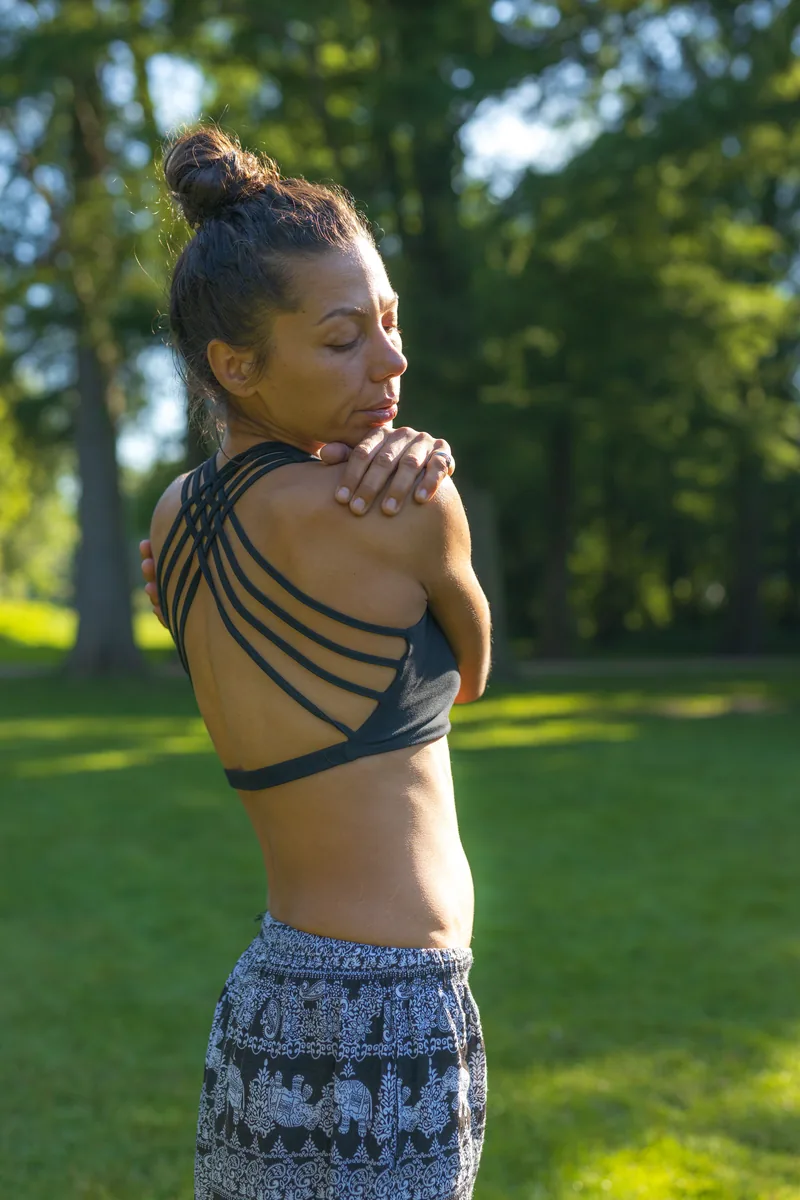
Fascia release session in natural light

Move · Breathe · Release

Myofascial release at home

You can do myofascial release at home with no equipment, in about ten minutes, and it works better slowly than hard. That last part is where most people go wrong.

Myofascial release means working with fascia — the connective tissue that wraps and links every muscle in your body — to restore its glide. At home, that means light sustained contact and slow movement, not pressing into a sore spot until it gives.

Equipment

What you actually need

Less than you'd think.

  • Your hands are enough to start. This method begins with the hands because they let you feel how the skin moves and how much pressure is enough — feedback no tool gives you. You do not need expensive equipment to begin.
  • A soft ball is optional. It can help with areas you can't comfortably reach, like parts of the feet or back. A tennis ball does the job as well as anything sold for it.
  • A foam roller is optional too, and easy to misuse. Rolling fast over a tight area mostly teaches you to brace. If you use one, go slower than feels natural and stop where you find something.

What matters isn't the equipment. It's the principle: gentle contact, slow movement, comfortable breathing, and noticing how the area responds. I don't recommend trying to break, smash or force tissue into changing.

Step by step

The method

Five steps, in this order, every time.

  1. 01

    Anchor. Make light contact with the skin and gently take up its slack. Light enough that you could slide a sheet of paper under the pressure.

  2. 02

    Move. Slowly glide, twist or lengthen the tissue under your hands — a small amount. Think millimetres, not inches.

  3. 03

    Breathe. Keep breathing comfortably throughout. In a session I'll often guide three rounds of inhaling through the nose and exhaling through the mouth, then three rounds of inhaling and exhaling through the mouth, while the gentle movement continues. Keep it comfortable — if either pattern feels strained, go back to breathing naturally.

  4. 04

    Release. Come out slowly. Never force a sensation or try to make something happen.

  5. 05

    Integrate. Walk, sway or rock gently for about thirty seconds, and notice any change before you move on.

That last step is the one people skip, and it's the one that makes the difference.

Laura Perez resting her hands on her own shoulder to release the tissue
By body area

Where to start

Four areas worth exploring. Hips first makes sense for people who sit for long periods or train, and the shoulders and neck are a familiar place to notice bracing — but don't treat the order as a rule. Start with whichever area feels accessible and comfortable. If grounding is what you need, start with the feet and notice your contact with the floor.

The aim is to learn body awareness, not to work out where pain is coming from.

Hips

Why here: hips are where most people hold the most, especially if they sit all day or train.

What to do. Start in a comfortable position and place your hands on the skin over the side of the hip, or the soft tissue around it. Gently pin the skin, take up a little slack, and slowly draw or rotate it through a small range. You can add a mild counter-rotation if that feels comfortable. Keep the effort low and breathe normally. After you release your hands, stand and gently rock or walk for about thirty seconds before checking how the area feels.

What it should feel like. A mild skin traction or gentle stretch — never sharp, pinching or deep pain. There's no need to force the hip open or push into an end range.

Shoulders and neck

Why here: this is where stress shows up first, and where breathing gets restricted.

What to do. Begin with light contact on the skin around the upper shoulder and the soft tissue beside the neck. Gently pin the skin and draw it a small distance, changing direction slowly rather than digging in. Add a comfortable shoulder roll, sway or small head movement only if it feels easy. Don't press on the front of the throat, and don't force the neck into rotation or extension. Keep the jaw relaxed, breathe comfortably, then walk or rock gently for about thirty seconds.

What it should feel like. Gentle traction and increasing ease — not pressure on the throat, tingling, dizziness or pain. Stop if any of those appear.

Lower back

Why here: often the symptom rather than the source, which is why the hips come first.

What to do. I prefer to begin with comfortable contact on the soft tissue beside the spine or around the hips, rather than pressing directly onto the spinal bones. Gently take up the slack in the skin and make a small, slow traction or glide. Pair it with easy pelvic rocking if that feels good. Keep the movement small, breathe without bracing, and finish with a short walk or gentle sway.

What it should feel like. Subtle and comfortable, with no sharp pain, forceful twisting or pressure directly into the spine. If back symptoms are new, severe or persistent, get advice from a qualified healthcare professional rather than trying to work through them.

Feet

Why here: the fascia is continuous, and the feet change how everything above them loads.

What to do. Sit comfortably and use your fingers or palm to make gentle contact with the skin around the arch and sole of the foot. Slowly pin and glide the skin in small directions, exploring the arch and the area around the heel without digging hard into a tender spot. Then stand and gently shift your weight from foot to foot, or take a short walk, noticing how your feet meet the ground.

What it should feel like. Light traction, warmth, or simply more awareness of the foot — not bruising or sharp pain. Reduce the pressure if you find yourself tensing your toes or holding your breath.

Hydration

How to hydrate fascia

Fascia contains a substantial amount of water, and normal hydration supports healthy tissue function. But this matters less in terms of how much you drink than people assume.

  • Move in varied ways through the day. Change position often. Rotate, reach, hang, squat. Varied, comfortable movement changes how tissue is loaded and unloaded, and range matters more than effort.
  • Drink normally. Ordinary hydration is enough. There's no need for special waters, electrolyte powders or supplements marketed for fascia.
  • Let it move afterwards. Gentle walking, rocking and changing position after a release helps you notice how the area feels in motion. That's why the integrate step isn't optional.

I'd describe all of this as supporting movement and body awareness — not as a promise that a particular maneuver rehydrates or repairs fascia.

Frequency

How often

For most people, a short gentle practice most days is a realistic starting point — five to ten minutes, one or two areas, finishing with a little easy movement. Daily practice is worth encouraging, but the amount should be adapted to you and how you respond.

A longer session once a week is optional, not a requirement. Consistency and comfortable technique matter more than pressing harder or getting through more areas at once.

Take a break, or get advice, if symptoms persist or get worse.

Common mistakes

What not to do

This is where most people's experience goes wrong. The difference in this approach is simple: more force is not the goal.

  • Don't chase pain. Sharp pain is a reason to stop, not proof that it's working. Discomfort you can breathe through is fine. Pain you brace against is not.
  • Don't go fast. Speed is what makes it feel like nothing is happening, so people press harder to compensate.
  • Don't bruise yourself. Avoid aggressive scraping, fast rolling over a sensitive area, or trying to force a release. Bruising is tissue damage, and the body guards harder against whatever hurt it.
  • Don't stack releases. Ten areas in one session is worse than two done properly with time to integrate.
  • Don't expect it to hold immediately. Change comes from repetition, not from one long session.

None of this means every foam roller or tool is harmful. Tools are optional and can be used gently. But hands give you the most useful feedback for this work.

Questions

Frequently Asked Questions

Yes. Most of it needs nothing but your hands and ten minutes. A soft ball helps for the back and feet, where you can't reach well.

None to start. A tennis ball or soft massage ball is useful for the back and feet. Foam rollers are optional and easy to overuse. You don't need a vibrating gun or a scraping tool.

It shouldn't. Discomfort you can breathe through is normal; sharp pain means stop. If you're bracing against it, there's too much pressure.

For a beginner, five to ten minutes is enough to explore one or two areas without rushing. Fifteen minutes works well when you're following a guided sequence. Give yourself time to breathe naturally, move slowly, and integrate with a short walk, sway or gentle rocking. Stop earlier if you feel discomfort or fatigue — the goal is a practice you can repeat, not a long or intense session.

A short gentle practice most days is a realistic start: five to ten minutes on one or two areas. Adapt the amount to how you respond. A longer weekly session is optional, not a requirement.

Foam rolling presses into muscle with bodyweight. This works the skin and the layer underneath it with light sustained contact and slow movement. Less force, more attention.

Self-practice is a valuable way to build body awareness and keep a regular routine without equipment. Working with a qualified practitioner can help you learn the technique, adapt it to your needs, and understand what pressure and movement are comfortable for you. Neither is a cure, and neither replaces medical care when that's what's needed.

Important note

Stop if you get sharp pain, dizziness, numbness, nausea, or anything that doesn't settle.

This is a movement and body-awareness practice, not medical treatment, and it is not intended to diagnose, treat or cure any condition. If you have a health condition, are pregnant or nursing, take medication, or are working around an injury, speak to a qualified healthcare professional before starting.